




Basics of MRI
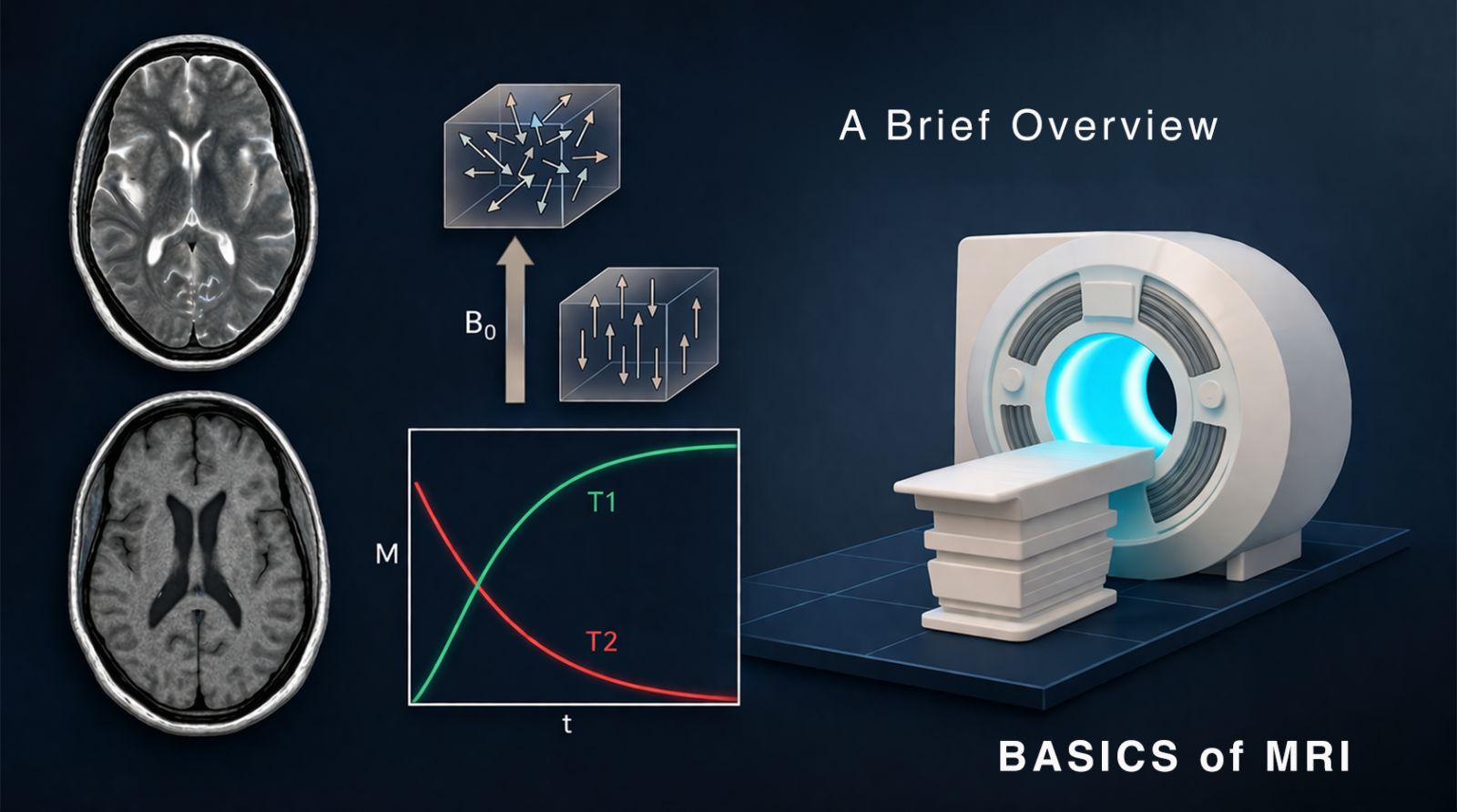
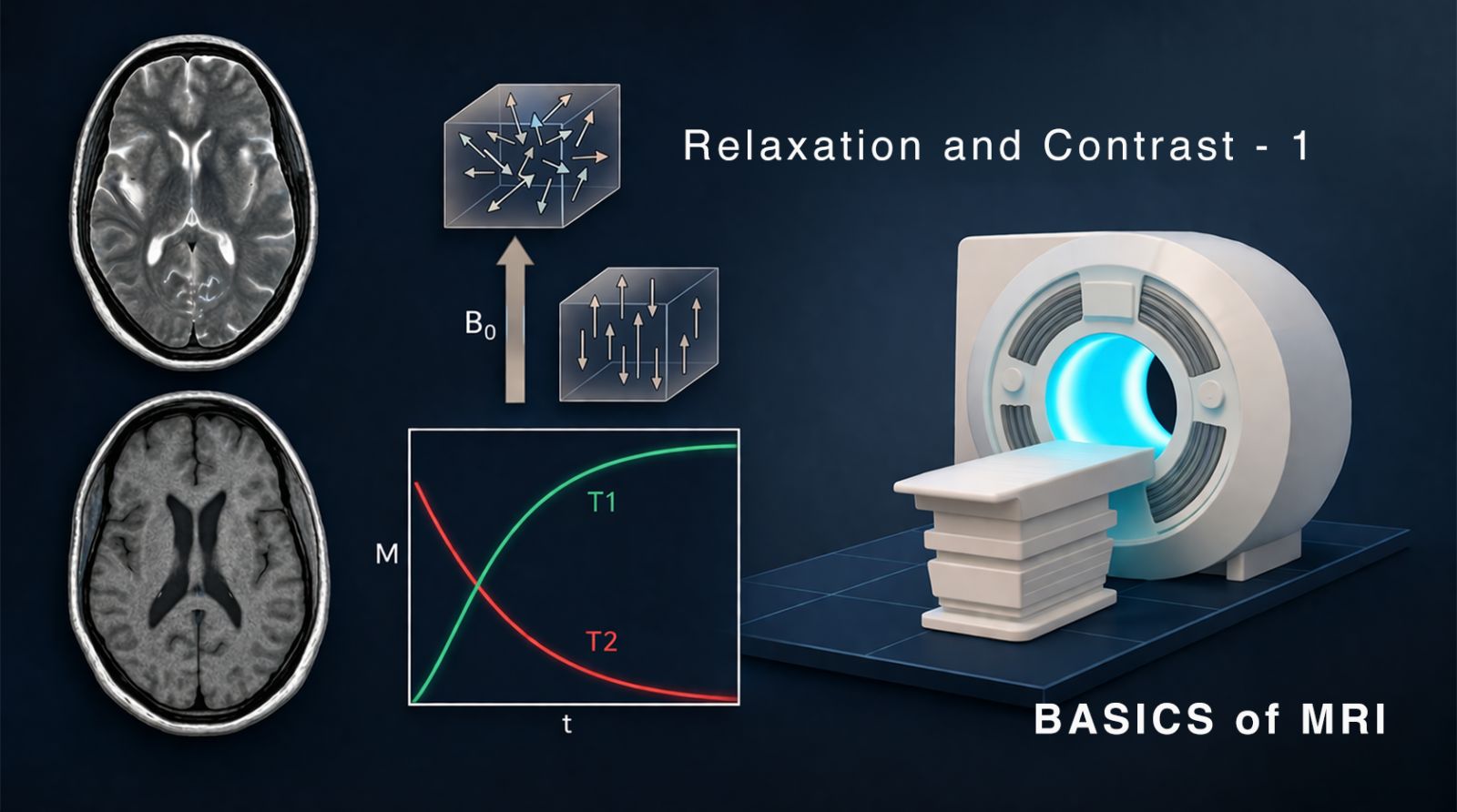
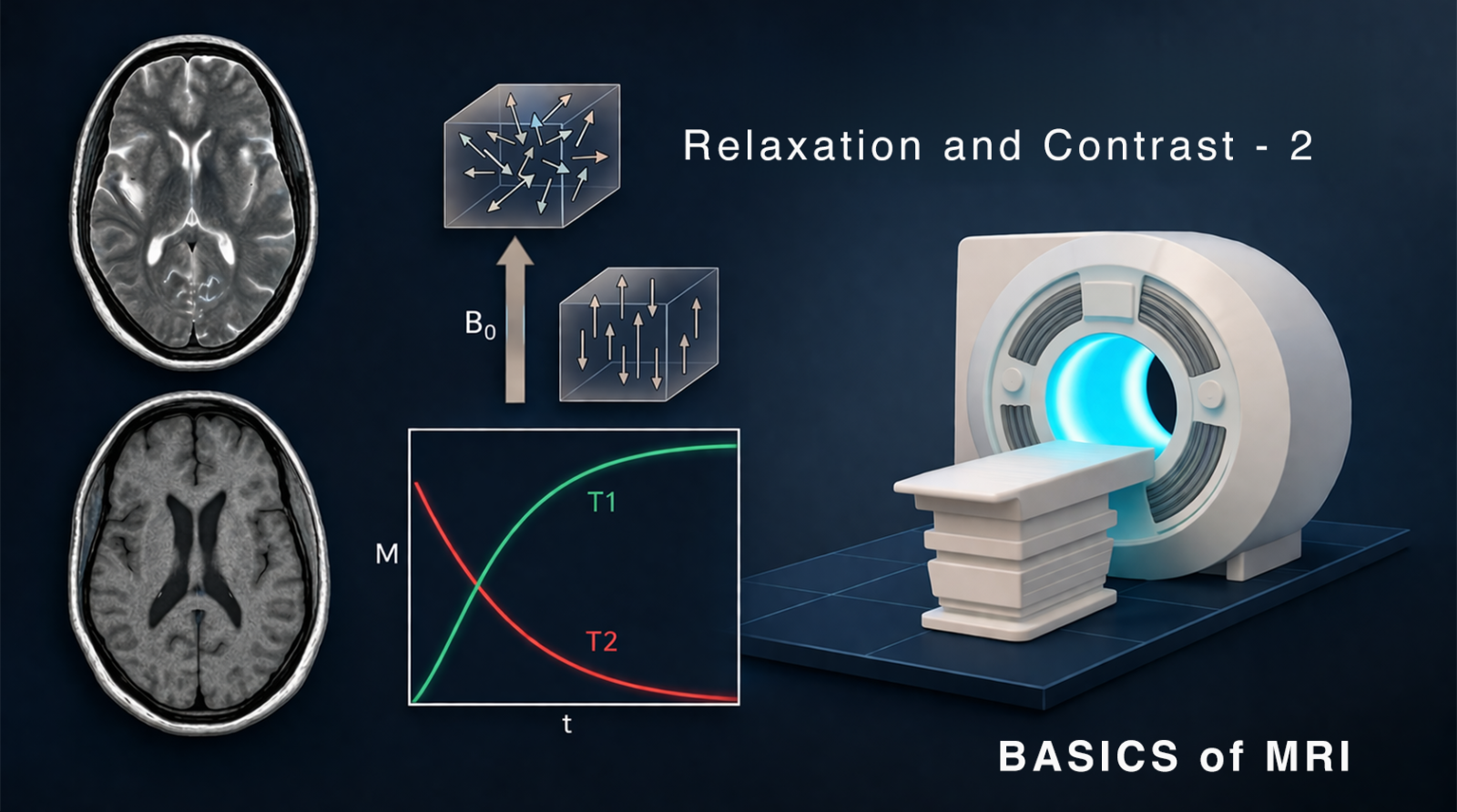
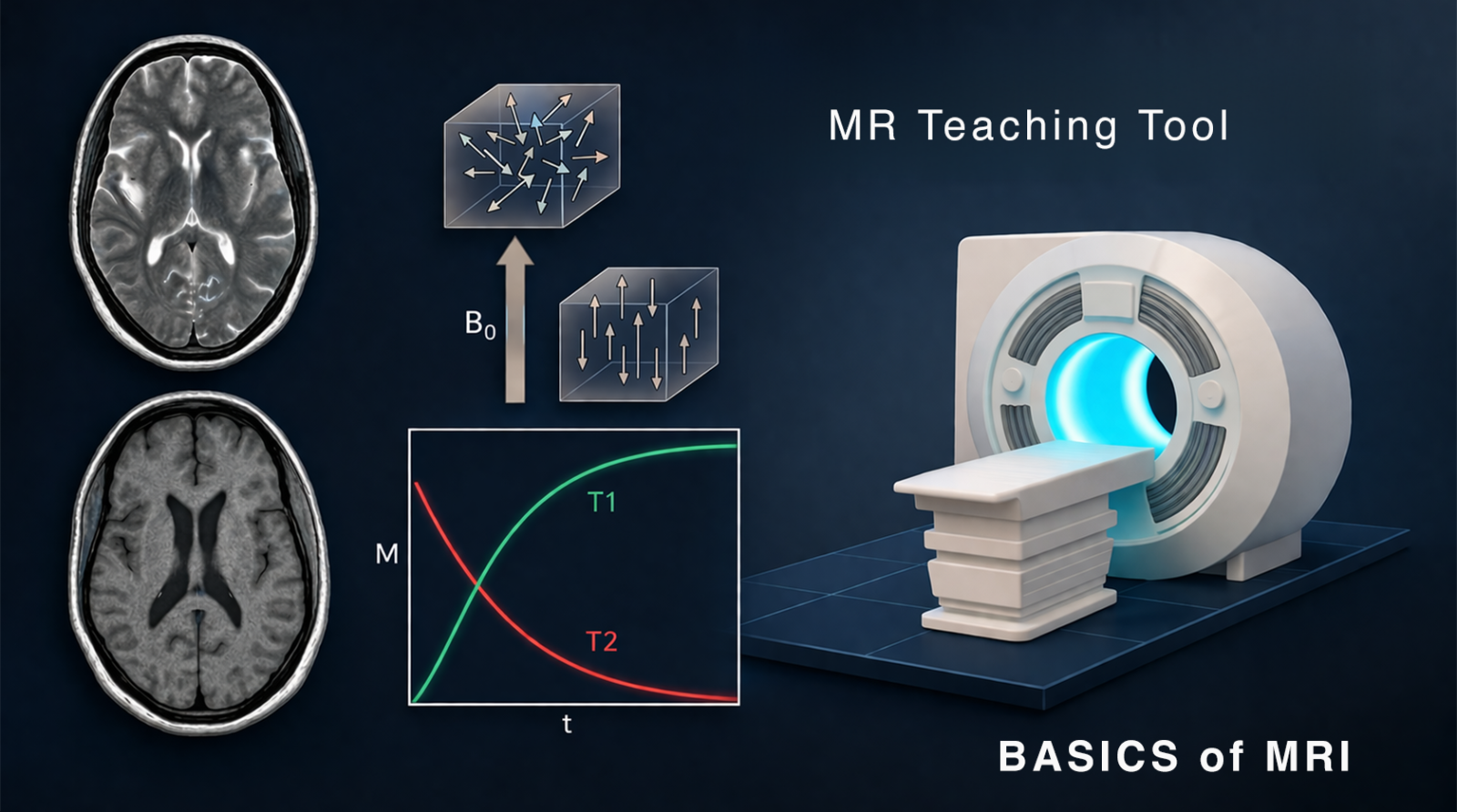
Short Description: This course introduces the fundamentals of MRI, covering the basic physics and imaging techniques. Students will gain a foundational understanding of how MRI works. Possible topics include magnetization, relaxation, quantum mechanics, signal detection and acquisition, Fourier imaging, image reconstruction, contrast, signal, and noise, water-fat separation, steady-state gradient echo imaging, echo-planar imaging, hardware issues, and fast/parallel imaging.
Target Audience: Graduate students, researchers, radiology technicians, and medical doctors with an interest in understanding the fundamental principles of MRI.
Prerequisites: Basic understanding of physics and algebra. No prior MRI knowledge needed.
Course Objectives:
1. Understand the fundamental physics and hardware components of MRI
2. Learn the fundamentals of signal creation and measurement
3. Learn the basics of the concepts of how contrast is created
Course Materials:
Textbook: Brown RW, Cheng YN, Haacke EM, Thompson MR, Venkatesan R. Magnetic Resonance Imaging: Physical Principles and Sequence Design. 2nd ed. Hoboken, NJ: Wiley-Blackwell; 2014.
Software: None
|
Module |
Topic |
Lecture |
|---|---|---|
|
Module 1 |
Motivation |
|
|
Module 2 |
Image Reconstruction |
Will be recorded soon |
|
Module 3 |
Relaxation |
|
|
Module 4 |
Contrast (IR, Saturation Recovery, General Excitation Recovery) |
|
|
Module 5 |
MR Teaching Tool |
|