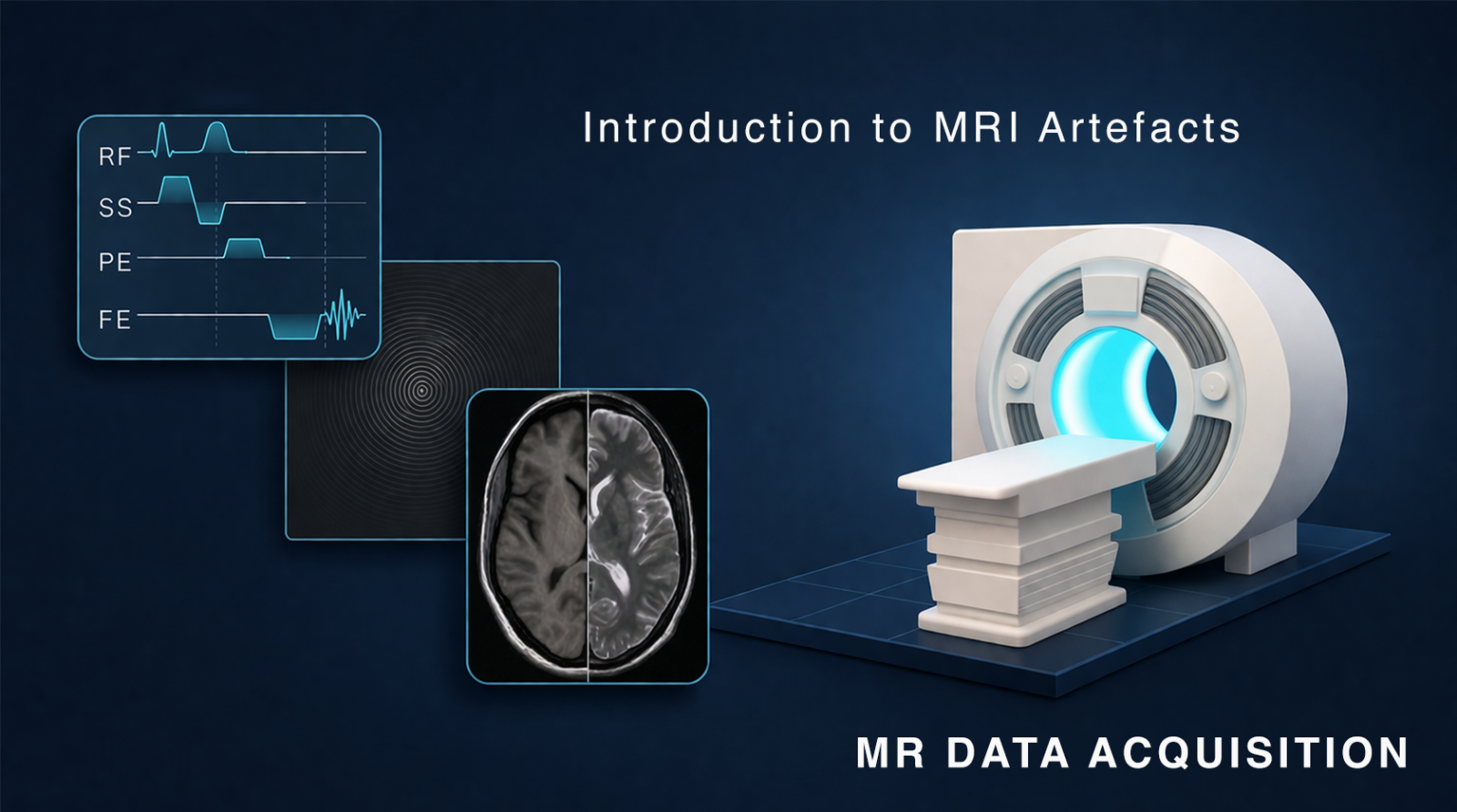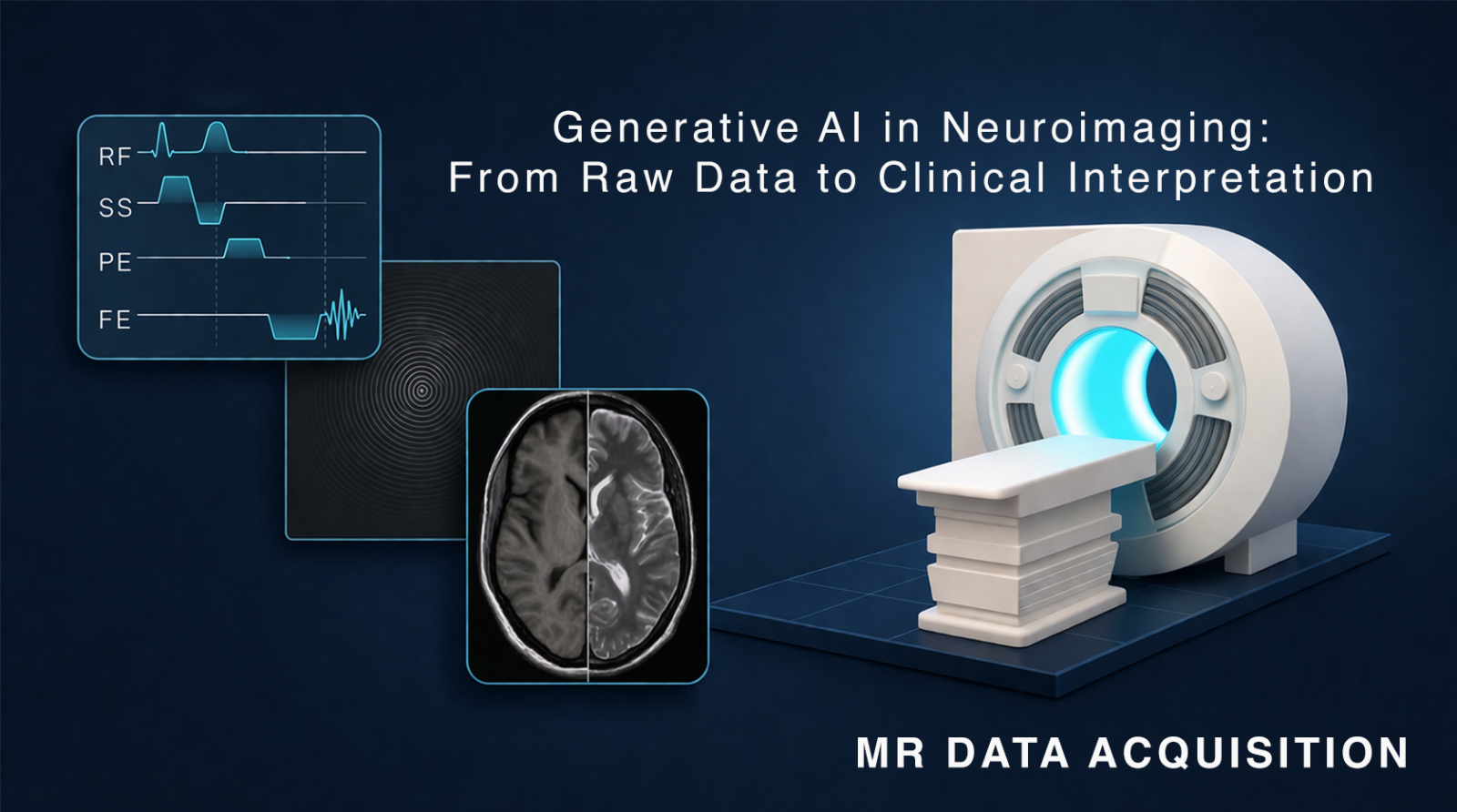





MR Data Acquisition
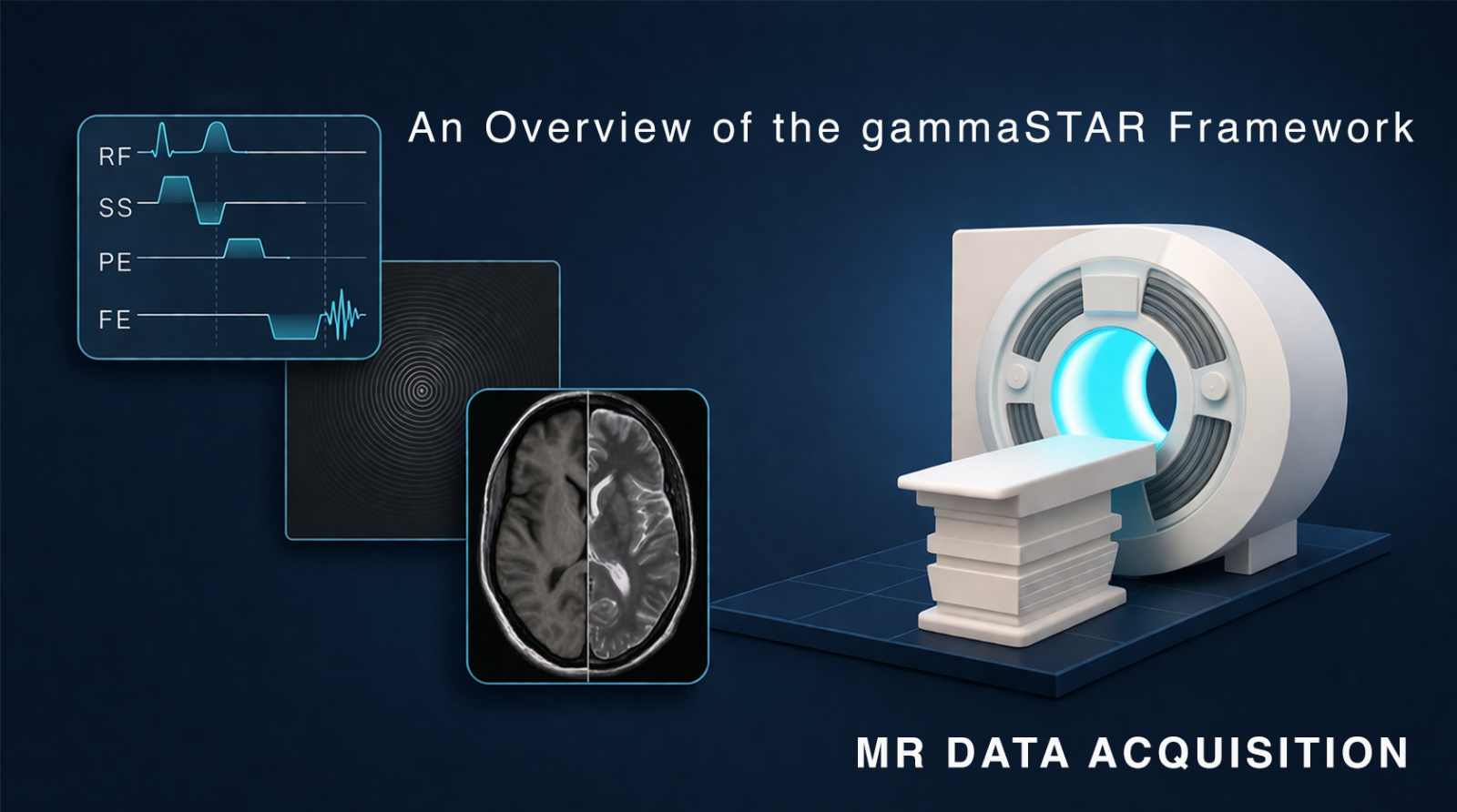
Short Description: This course focuses on the principles and techniques of MRI data acquisition, providing students with essential knowledge and hands-on skills. Topics include MRI sequences, such as spin-echo and gradient-echo, as well as advanced methods such as gammaSTAR. By the end of the course, participants will be equipped to understand and apply key MRI acquisition techniques in practice.
Target Audience: MSc and PhD students who are interested in learning the main methods of MRI data acquisition
Prerequisites: Basics of MRI
Course Objectives:
1. Understand the concept of k-space and its role in MRI image reconstruction.
2. Learn the fundamentals of MR sequences and explore advanced sequences to enhance image quality.
3. Understand EPI and GRASE sequences for functional and structural imaging applications.
4. Gain proficiency in parallel imaging techniques to optimize scan time, resolution, and performance.
5. Explore compressed sensing for improved image quality and reduced scan times.
6. Apply AI-enhanced methods for image reconstruction and analysis.
7. Learn and apply motion correction techniques to reduce artifacts and improve dynamic imaging.
8. Identify common MRI artifacts and develop methods to minimize their impact.
9. Develop skills in sequence programming to create and optimize MRI protocols for various applications.
Course Materials:
Textbook: None
Software: None
Exercise: TACTIX Computational MRI product development (gammaStar) tutorial
|
Module |
Topic |
Lecture |
|
Module 1 |
From Idea to Data Acquisition |
|
|
Module 2 |
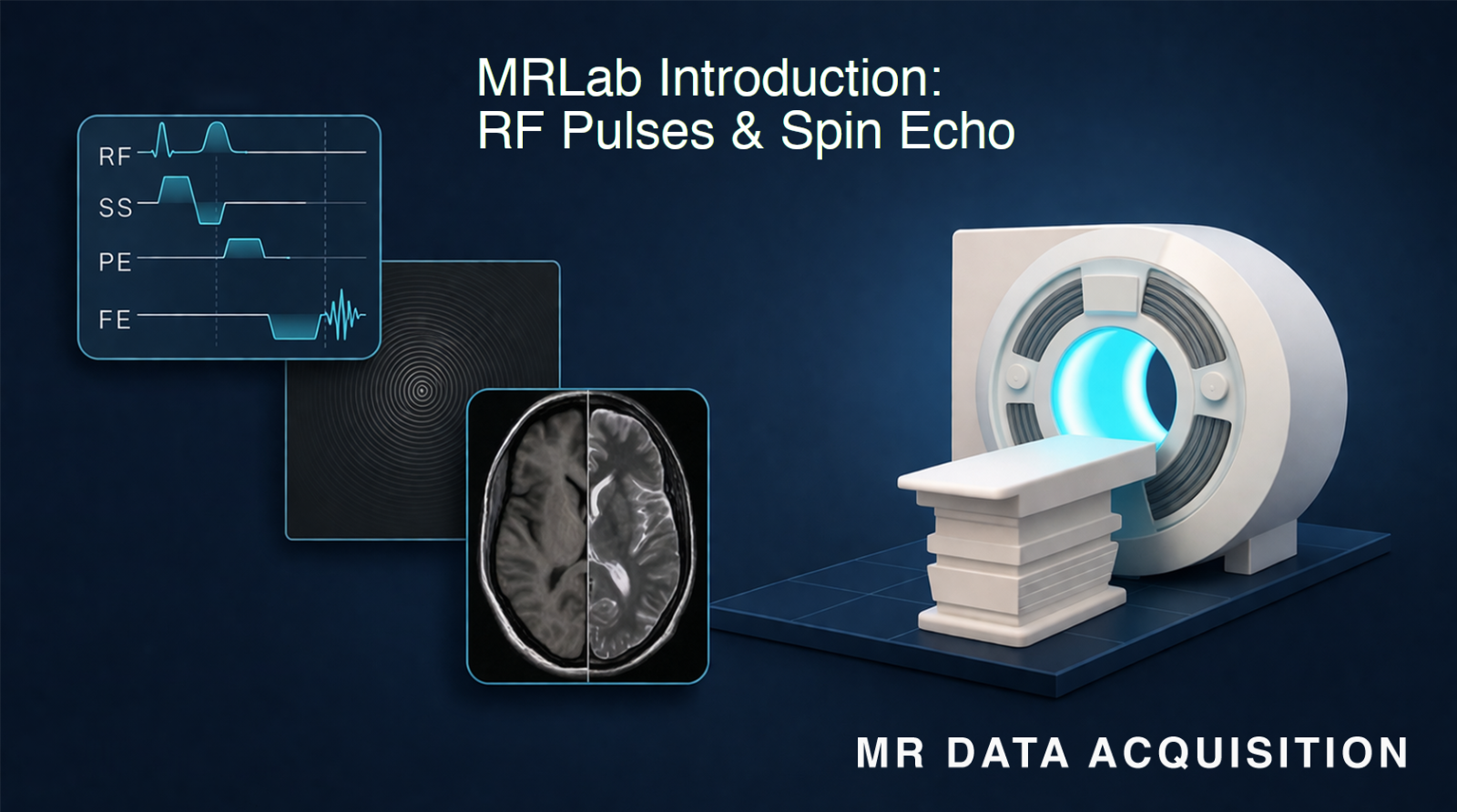
MRLab Introduction: RF Pulses & Echoes |
|
|
Module 3 |
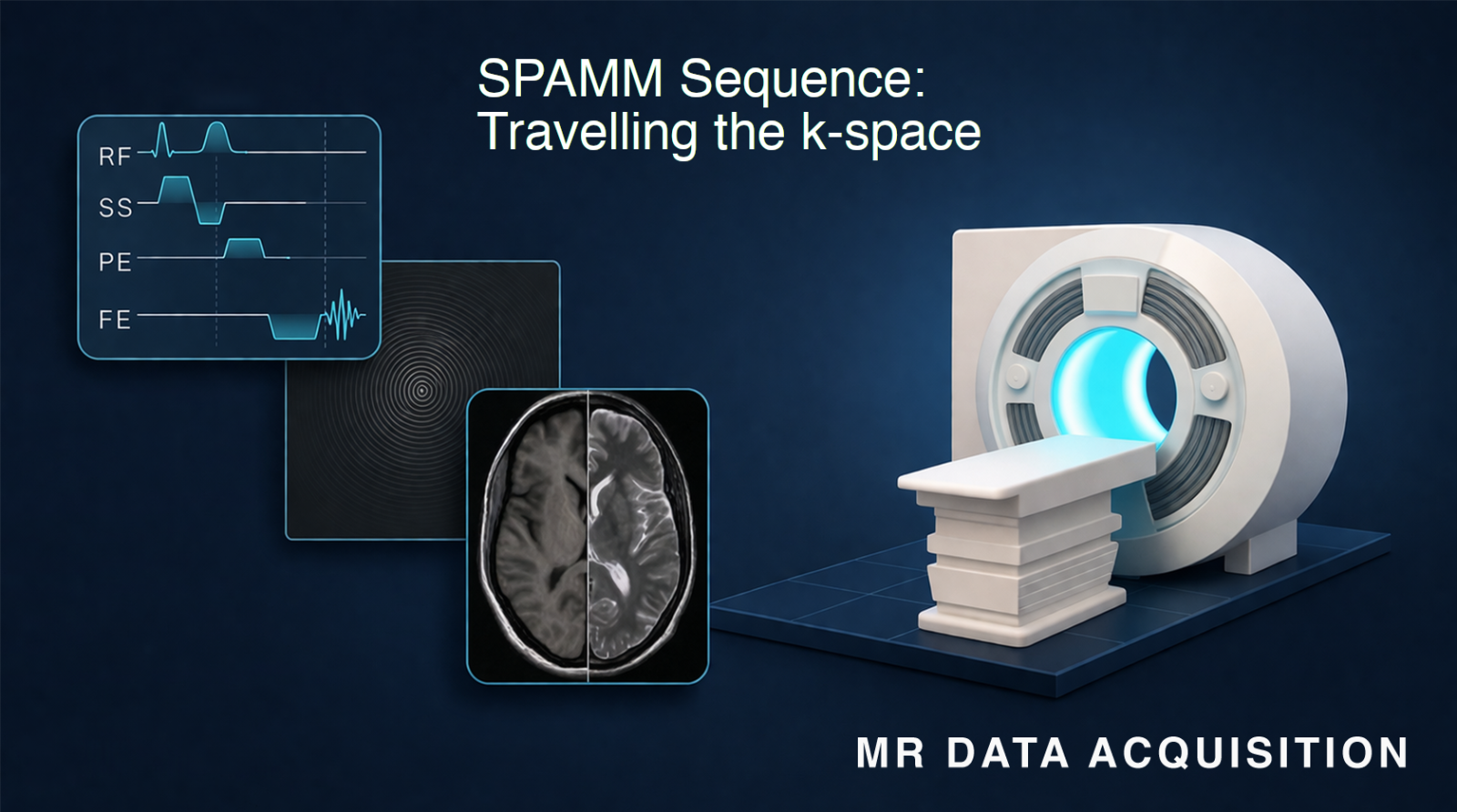
SPAMM Sequence: k-Space Traveling & Reconstruction |
|
|
Module 4 |
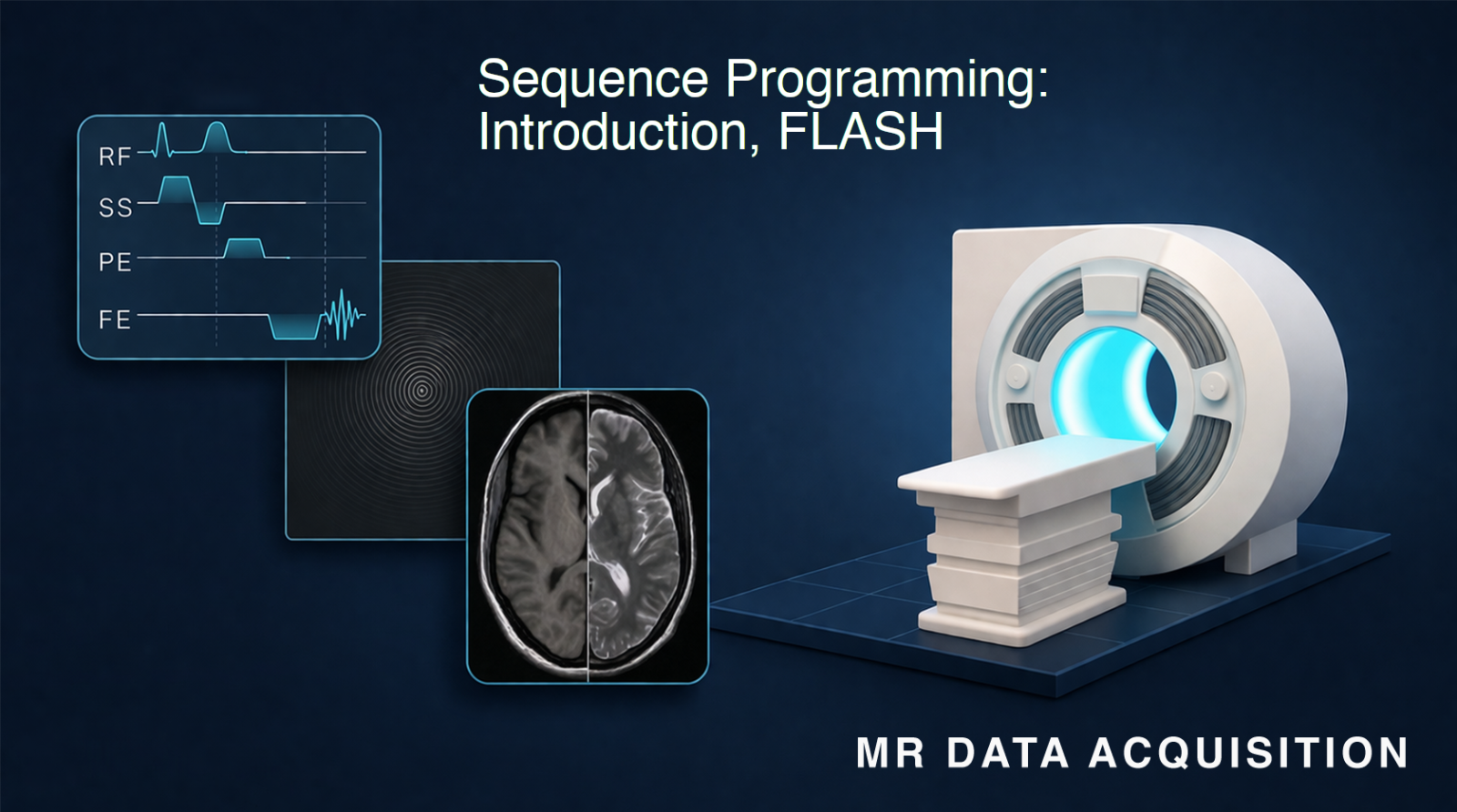
Sequence Programming: Introduction, FLASH |
|
|
Module 5 |
Sequence Programming: RARE |
|
|
Module 6 |
Sequence Programming: EPI |
|
|
Module 7 |
Sequence Programming: RADIAL |
|
|
Module 8 |
Sequence Programming: STROKE |
|
|
Module 9 |
MRI Artifacts |
|
|
Module 10 |
Applied Topics: Generative Artificial Intelligence in Neuroimaging: From Raw Data to Clinical Interpretation |
|